
Share
Pour-over shows you the most of what's actually in the cup - the florals, the fruit acidity, the sweetness that espresso compresses and a plunger muddies. This guide covers the numbers that matter - ratio, grind, temperature - then a complete V60 recipe and a fix-it section, all following well-established Specialty Coffee Association convention.
What ratio should I use for V60?
Use a brew ratio between 1:16 and 1:17 - that is, 1 gram of coffee for every 16–17 grams of water. For a single mug, that's 15 g of coffee to 250 g of water; for two cups, 30 g to 500 g. This range sits squarely within Specialty Coffee Association convention for filter brewing.
Lock the ratio down first - it sets the strength of the cup before grind or temperature get a say. Weigh both coffee and water on a scale; "two scoops and fill to the line" drifts between brews and makes every other adjustment guesswork. If a 1:16 cup is too intense, stretch to 1:17; weaker than 1:18 thins out and loses sweetness.
What grind size should I use for pour-over?
Grind medium-fine for V60 - similar in texture to table salt or fine beach sand, noticeably finer than the medium grind used for batch filter, but far coarser than espresso. A correct grind should give a total brew time of roughly 2:30–3:30 for a 250–500 g brew.
Grind controls contact time and extraction together: finer particles slow the drawdown and extract more; coarser particles speed it up and extract less. A burr grinder is the single biggest equipment upgrade you can make - blade grinders produce a mix of dust and boulders that extracts unevenly no matter what you do. Something like the Fellow Ode Gen 2 grinder is built specifically for filter brewing and makes dialling in repeatable, one click at a time.
What water temperature should I use?
Brew with water between 92°C and 96°C - the long-standing SCA-recommended window for filter coffee. If you don't have a temperature-controlled kettle, boil your water and let it sit for about 30–45 seconds with the lid off; it will settle into that range naturally.
Within the window, hotter water (94–96°C) suits lighter roasts, which are denser and need more energy to extract; slightly cooler water (92–93°C) suits medium and darker roasts. Water quality matters too - if your tap water tastes flat or strongly of chlorine, filtered water will make a cleaner, sweeter cup.
Step-by-step V60 recipe (one large mug)
This recipe makes roughly 400 mL of brewed coffee using a 02-size dripper such as the Hario V60 Drip Decanter. Scale it up or down by keeping the ratio constant.
- Dose: 30 g of coffee, ground medium-fine. We roast to order, so let fresh bags rest 5–10 days off roast.
- Ratio: 1:16 - 30 g coffee to 480 g water total.
- Rinse: Place the paper filter in the dripper and rinse thoroughly with hot water to remove paper taste and preheat the brewer. Discard the rinse water.
- Bloom: Add the grounds, level the bed, and start your timer as you pour 60 g of water (about twice the coffee weight). Swirl gently so all the grounds are wet, then wait 30–45 seconds while the coffee de-gasses.
- First pour: At 0:45, pour in slow, steady spirals from the centre outward until the scale reads 240 g (around the 1:15 mark).
- Second pour: At 1:30, pour gently to 480 g total, finishing by about 2:00 - you're topping up the water level, not blasting the bed.
- Drawdown: Give one final gentle swirl to flatten the bed, then let it drain. The bed should look flat, not cratered or domed.
- Total time: Aim for 2:45–3:30 from bloom to the last drips. Much faster, grind finer next time; much slower, grind coarser.
What about Chemex?
A Chemex works on the same principles as a V60 with three adjustments: grind slightly coarser (medium rather than medium-fine), expect a longer total brew time of 4–5 minutes for a larger batch, and keep the same 1:16–1:17 ratio. Its thicker bonded filters produce an exceptionally clean, tea-like cup.
Because those filters hold back more oils and fine sediment, Chemex flatters delicate coffees and is the natural choice when brewing 3–4 cups for the table. The Chemex Classic 6-Cup covers everything from a generous solo brew to a full pot. Rinse the thick filter especially well, and pour in the same staged spirals as the V60 recipe above.
Troubleshooting: sour, bitter, or weak?
Almost every off-tasting pour-over is an extraction problem, and extraction moves in one direction: sour and sharp means under-extracted, so grind finer or brew hotter; bitter and harsh means over-extracted, so grind coarser or brew cooler. Change one variable at a time and re-taste.
- Sour, thin, salty, or grassy: under-extraction. Grind one step finer or raise the temperature toward 96°C. A brew finishing well under 2:30 is a giveaway.
- Bitter, dry, ashy, or astringent: over-extraction. Grind one step coarser, drop toward 92°C, and pour more gently. Drawdowns past 4:00 usually mean the grind is too fine.
- Weak but not sour: a strength problem - tighten the ratio from 1:17 toward 1:16.
- Stalled drawdown: usually fines from a blade grinder, or over-aggressive pouring collapsing the bed.
Which coffee should I use for pour-over?
Light and medium-light roasts shine in pour-over: the method's clarity reveals the origin character - florals, citrus, stone fruit - that defines them. Choose a fresh single origin roasted for filter, rest it 5–10 days off roast, and grind just before brewing.
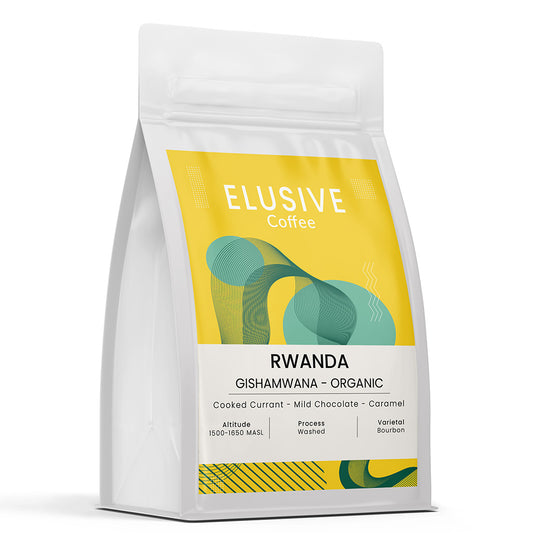
From our own bench, the Ethiopia Yirgacheffe Haro is the classic V60 showcase - a light roast with the floral-and-citrus profile the dripper was designed for - while the Gishamwana Island Rwanda is a medium-light pick with a rounder sweetness that also suits a Chemex. Every bag is roasted to order at our Adelaide roastery - browse the full Adelaide-roasted range to find your next brew.
Frequently asked questions
How much coffee do I need for one cup of V60?
For a standard mug, use 15 g of coffee to 250 g of water at a 1:16 ratio. For a large mug, 18 g to 300 g. Weigh both on a scale - eyeballing the dose is the most common reason home pour-overs taste different every day.
Do I need a gooseneck kettle for pour-over?
It helps more than any accessory short of a grinder. The gooseneck spout gives a slow, controlled stream so you can wet the bed evenly without channelling. A regular kettle works with careful pouring, but consistency is much harder.
Why do I bloom the coffee first?
Fresh coffee holds carbon dioxide from roasting. The bloom - wetting the grounds with twice their weight in water and waiting 30–45 seconds - lets that gas escape. Skip it and the CO2 pushes water away from the grounds, causing uneven, sour-leaning extraction.
How fresh should the beans be for V60?
Use beans roasted within the past month, ideally rested 5–10 days off roast - very fresh coffee blooms so vigorously it can brew unevenly. Because we roast to order, your bag typically lands in that sweet spot as it arrives. Grind just before brewing.
Keep reading
- AeroPress brew guide
- French press brew guide
- The pursuit of clarity: tasting coffee
- Mastering the brew: a guide to extraction
Shop Elusive: Shop fresh-roasted coffee · Kruve grind calculator