

Share
The AeroPress is the most forgiving brewer we know - fast, near-impossible to ruin, and small enough to live in a backpack. This guide covers the standard recipe we use at the roastery, the inverted method, and how to brew well away from home. Every number here follows established brewing practice.
What ratio should I use for an AeroPress?
Use a 1:15 ratio - 15 grams of coffee to 225 millilitres of water - for a balanced filter-style cup. For a stronger, concentrate-style brew, tighten to 1:12 (15 g to 180 ml) and dilute to taste with hot water afterwards, the way you would an espresso-style long black.
The AeroPress chamber comfortably holds about 250 ml below the rim, so 225 ml is a practical ceiling for a single brew. If you want a bigger mug, brew the 1:12 concentrate and top up - you keep the strength consistent without overfilling the chamber.
What grind size should I use?
Grind medium-fine - noticeably finer than pour-over, clearly coarser than espresso, about the texture of table salt. At this grind, a 2-minute steep extracts evenly and the plunge takes 20–30 seconds. If the press takes much longer than 30 seconds, coarsen slightly; if it offers no resistance, go finer.
The AeroPress's short contact time is why it rewards a finer grind than most brewers. Grinding fresh matters more than the exact setting: pre-ground coffee loses aromatics within days, while whole beans ground just before brewing keep their sweetness. A quality burr grinder - hand or electric - is the single biggest upgrade to an AeroPress cup.
What water temperature is best?
Use 85–96°C depending on the roast. For medium roasts, 90–95°C is the sweet spot; for darker roasts, drop to 85–90°C to avoid harshness. In practice, boiling the kettle and waiting 30–60 seconds with the lid off lands you in the right range - no thermometer required.
How do I brew a standard AeroPress?
This is the upright method, the one in the box. Total brew time is about 2.5 minutes from first pour to finished press. You'll need an AeroPress, paper filters, a kettle and ideally a set of scales.
- Dose: Weigh 15 g of coffee and grind medium-fine.
- Prep: Put a paper filter in the cap, rinse it with hot water, and screw the cap onto the chamber. Stand it on your mug or server and add the coffee.
- Water: Start a timer and pour 225 ml of water at 90–95°C, wetting all the grounds.
- Stir: Give it three gentle stirs, then insert the plunger about 1 cm to create a seal - this stops it dripping through early.
- Steep: Wait until the timer reads 2:00.
- Press: Push down slowly and steadily for 20–30 seconds, stopping when you hear the first hiss of air. Total time: roughly 2:30.
Pressing past the hiss forces air through the bed and can push bitter fines into the cup - stop at the hiss and you're done.
Should I brew inverted?
Inverted brewing - flipping the AeroPress so the plunger sits at the bottom during the steep - prevents any drip-through and gives you full control over steep time. Both methods produce very similar cups at the same 15 g dose, 225 ml water and 2-minute steep; inverted is simply less fussy mid-brew.
The inverted variant: assemble the AeroPress upside down with the plunger inserted about 2 cm, add 15 g of coffee and 225 ml of water at 90–95°C, stir three times, and steep for 2 minutes. Screw on the cap with a rinsed filter, place your mug on top, flip the whole assembly confidently in one motion, and press for 20–30 seconds. The flip is the only risk - keep one hand on the mug and commit to it. If you'd rather not juggle hot water, the standard method with the plunger-seal trick in step 4 achieves nearly the same thing.
Which coffee works best in an AeroPress?
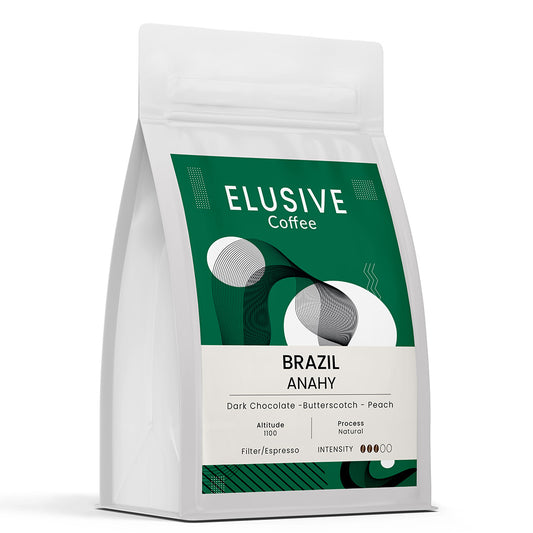
Medium roasts are the most forgiving and consistently sweet in an AeroPress - the short steep and full immersion flatter their balance of body and sugar-browning sweetness. From our Adelaide-roasted range, we reach for Anahy (Brazil, medium) first: chocolate and nut tones that the AeroPress renders smooth and rounded.
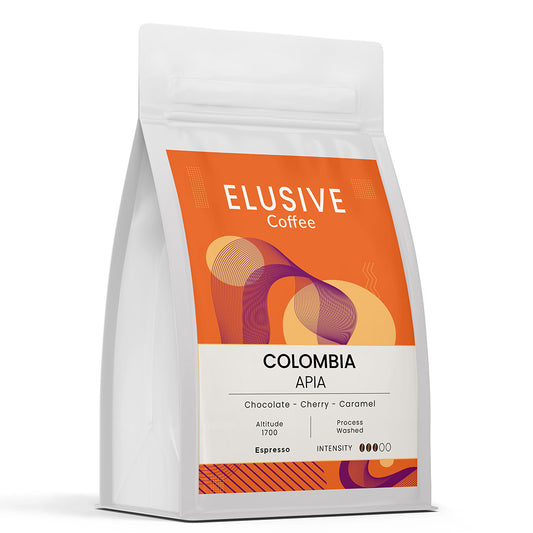
If you're brewing after lunch, Apia Decaf (medium) behaves beautifully here too - decafs can run slightly faster through a press, so if yours plunges with no resistance, tighten the grind a notch. Because we roast to order, your beans arrive days off the roast; give very fresh coffee 4–7 days of rest and it will brew more evenly.
Is the AeroPress good for travel?
It's arguably the best travel brewer made - light, plastic, and self-contained. The AeroPress Go Travel Coffee Maker packs the entire kit, including a mug with lid, into one unit roughly the size of a large keep-cup, and brews the same recipe: 15 g coffee, 225 ml water, 2-minute steep.
Pair it with a compact hand grinder like the 1Zpresso Q Air hand grinder and you have a complete fresh-coffee setup that fits in a carry-on side pocket. Pre-weigh doses into small zip bags before you leave, pack a stack of paper filters (they weigh nothing), and any hotel kettle gets you within range - boil, wait a minute, brew.
Why does my AeroPress taste bitter or sour?
Bitterness usually means over-extraction: grind too fine, water too hot, or steep too long. Sourness means under-extraction: grind too coarse, water too cool, or steep too short. Change one variable at a time - start with grind - and re-taste before adjusting anything else.
- Bitter or drying: coarsen the grind one step, drop water temperature to 88–90°C, or shorten the steep to 1:30. Also check you're stopping the press at the hiss.
- Sour or thin: tighten the grind, use water closer to 95°C, or extend the steep to 2:30–3:00.
- Weak but not sour: the ratio is the issue, not extraction - move from 1:15 toward 1:13.
- Gritty cup: rinse the paper filter before brewing and check the cap is screwed on straight; a skewed cap lets fines sneak past the filter's edge.
Frequently asked questions
Can the AeroPress make espresso?
Not true espresso - it can't reach the 9 bars of pressure an espresso machine generates. It does make an excellent strong concentrate at a 1:12 ratio that works well as a long-black base or with milk.
How many cups does one AeroPress brew?
One full-strength cup per press, since the chamber holds about 250 ml. For two cups, brew a 1:12 concentrate and split it between two mugs, topping each with hot water.
Do I need to rinse the paper filter?
A quick rinse with hot water removes any papery taste and seats the filter flat in the cap. It takes five seconds and is worth doing, especially with a fresh pack of filters.
How do I clean an AeroPress?
Press the spent puck straight into the bin, then rinse the rubber seal and chamber under the tap - done in ten seconds. Every few weeks, give the seal a proper wash in warm soapy water to keep it sliding smoothly.
Keep reading
- V60 pour-over brew guide
- French press brew guide
- How to make espresso at home
- Mastering the brew: a guide to extraction
Shop Elusive: Shop fresh-roasted coffee · Brewing equipment